
Overwatering or Underwatering? How to Check Your Potted Plants
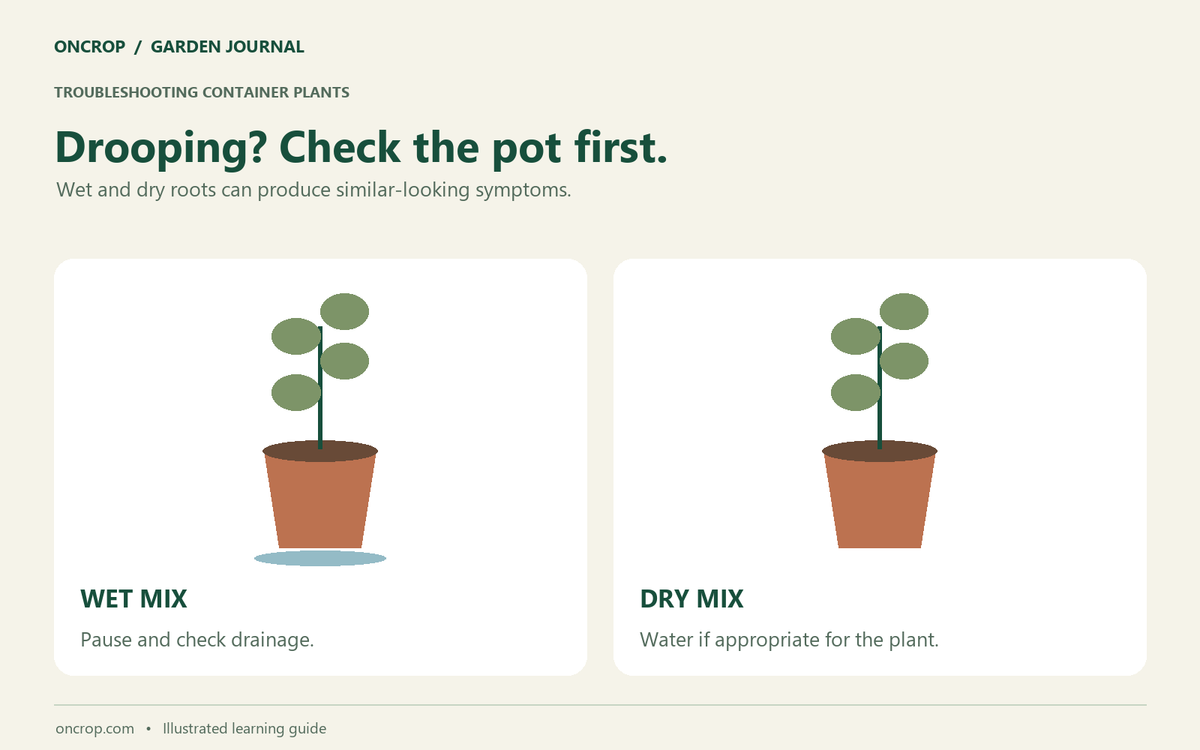
To tell overwatering from underwatering, check the growing mix and the pot rather than judging the leaves alone. A drooping plant in a persistently wet, heavy pot needs a different response from one in a dry, light pot. Yellow leaves or wilting can also have causes unrelated to watering.
The aim is not to attach a diagnosis to every leaf. It is to decide the safest useful next step before reaching for the watering can.
Overwatering versus underwatering: what should you check?
| Observation | If the pot is too wet | If the pot is too dry |
|---|---|---|
| Growing mix | Remains wet below the surface longer than expected for that plant | Dry at a depth relevant to the plant and container |
| Pot weight | Stays relatively heavy after previous watering | Noticeably lighter than after a thorough watering |
| Leaves | May wilt or yellow | May wilt or develop dry edges |
| Next check | Drainage, collected runoff and drying conditions | Whether water reaches the root zone evenly |
These are clues, not a diagnosis. For example, yellowing can reflect normal leaf ageing, light problems or nutrient issues. Repeatedly treating the wrong cause wastes time and may stress the plant further.
1. Check below the surface
A dry-looking surface can hide moisture further down. Where practical, gently feel below the top layer without damaging roots. For many established houseplants, checking roughly 5 cm down can be useful, but this is not a rule for every pot: a shallow seed tray, a deep container and a succulent need different judgement.
Lift a manageable pot and compare its weight with how it feels after watering and draining. The University of Maryland’s watering guide describes both the finger check and pot-weight comparison. Used together, they give more context than the leaf colour alone.
2. If the mix is still too wet, pause and inspect
Do not add another drink because the plant looks limp. First check whether water is trapped in a saucer or decorative outer container. Remove collected runoff, confirm that drainage openings are clear and keep the plant in light and temperature conditions suitable for its species.
Overwatering is often about watering again before the pot has dried sufficiently, not simply the amount poured in one go. A mix that dries slowly, low water use and trapped runoff can all contribute. The RHS container-watering guide recommends checking moisture and adapting care to the conditions.
If the base of the plant is soft, roots smell unpleasant or decline continues, get plant-specific help. Roots that are mushy or deteriorating need closer assessment; Virginia Cooperative Extension’s water-stress guide describes root symptoms. Immediate repotting is not the answer for every wet pot; if repotting is appropriate, use a suitable container and mix rather than simply a much bigger pot.
3. If the mix is dry enough for that plant, water evenly
For a conventional pot with drainage holes, apply water gently to the growing mix and let excess water escape. Make sure the root zone is wetted rather than giving one small corner a quick splash. Allow the pot to finish draining before returning it to a cover pot.
If water runs straight through while much of the mix remains dry, inspect whether it is following a gap around the edge. Rewet carefully in small passes and check again. Do not assume rapid runoff proves the roots received enough water.
A watering decision you can repeat

- Check: look at the plant, feel the mix and compare the pot’s weight.
- Decide: if the mix is still too wet for the plant, wait and investigate. If it is dry enough, water.
- Drain: remove excess runoff and make a brief note of what you observed.
Use this sequence as a checking habit, not a fixed interval. A “water every two days” reminder can be a reminder to inspect the pots; it should not automatically trigger watering.
Adjust for weather and the container
On an Indian balcony, compare the actual growing conditions through heat, rain and cooler periods. Do not carry the same watering rule unchanged through every season. A sheltered pot and one exposed to rain may need different care on the same day.
Keep a small record for a week: date, moisture before watering and whether runoff drained freely. This is an observation exercise rather than a promised recovery timetable. If you have several pots, number them so you can spot which one repeatedly behaves differently.
Frequently asked questions
Does a drooping plant always need water?
No. Check the mix first. Both too much and too little moisture can accompany wilting, and heat, root damage or other problems may also be involved.
Should I add compost to a waterlogged pot?
First identify why it stays wet. Compost is not a treatment for trapped runoff or blocked drainage. Review the container and current mix before adding ingredients.
How soon will an overwatered plant recover?
There is no reliable universal deadline. Recovery depends on the species, root condition and cause. Continued decline or soft tissue calls for closer assessment rather than repeated watering experiments.
Planning a fresh planting? Read our guide to coco peat, compost and vermicompost, then compare Oncrop’s growing materials for the needs of your plant.