
How to Start a Balcony Garden in India: A Practical Beginner’s Guide
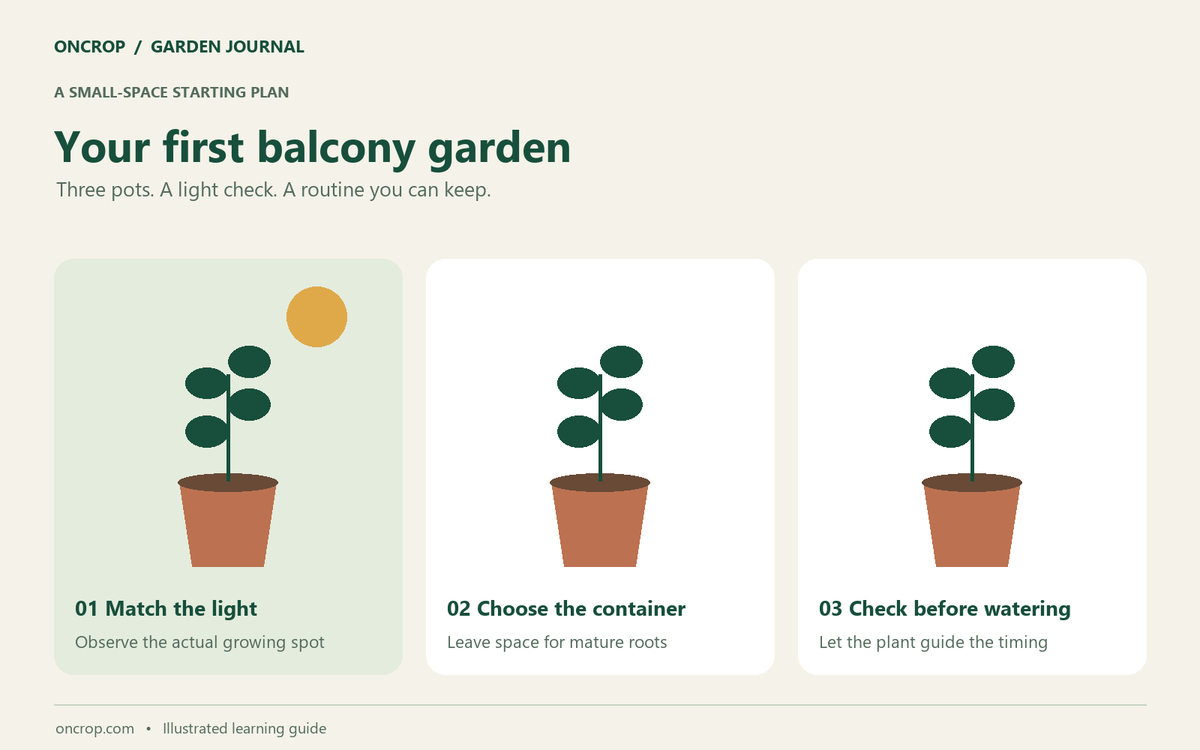
To start a balcony garden, first measure the sunlight at the growing spot, choose two or three suitable plants, and put them in containers with drainage and an appropriate potting mix. Check moisture regularly and water according to the plant’s needs. A manageable beginning is more useful than filling the balcony in one shopping trip.
This guide is for a small home balcony in India. It does not assume a particular city or a single planting calendar: a hot terrace in April, a rainy coastal balcony and a cool winter balcony need different choices.
1. Check your balcony before choosing plants
Make a simple observation sheet. At morning, midday and late afternoon, note where direct sunlight actually falls. Check the proposed pot position, not just whether the balcony faces east or west. Nearby buildings, overhangs and railings can change the usable light.
Then note wind, direct rain and the route you will use to carry water. Leave doors and drains accessible. Keep heavy containers on a suitable stable surface; confirm balcony loading limits with your building manager before installing a large garden. Do not balance pots on an unsecured railing.
2. Match the plant to the light you have
Many fruiting vegetables need a sunny position; some leafy crops can be more flexible. Read the requirements for the exact species and variety. Do not buy a sun-loving plant hoping fertiliser will compensate for a shaded corner. The RHS container vegetable guide is a useful starting point for crop choices; use local Indian sowing guidance rather than its UK planting dates.
| Your starting point | What to do next |
|---|---|
| Several hours of direct sun | Compare herbs, flowers or compact vegetable varieties with matching requirements. |
| Mostly bright shade | Choose plants explicitly suited to indirect light; avoid expecting a productive fruiting crop. |
| Strong wind or intense afternoon heat | Plan shelter and stable placement before choosing delicate plants. |
Start with one plant you are especially interested in and one or two with similar care needs. Growing a small collection well also makes it easier to notice what changes after you move a pot or adjust watering.
3. Choose containers for mature roots
A seedling’s current size is not a reliable guide to its final container. Read the mature spacing and root-space requirements before choosing a pot or grow bag. A larger plant may also need support and room above the pot.
Check that water can escape through drainage holes. If a nursery pot sits inside a decorative cover pot, make sure runoff can be removed. Compare containers by usable dimensions and capacity, not only by their appearance in a product photograph. Illinois Extension explains container materials and drainage, including why fabric and terracotta can dry faster than less porous materials.
4. Use a mix intended for your planting
For a first attempt, a prepared mix labelled for your type of plant reduces the number of decisions. Check whether it already includes compost or fertiliser. Buying several additions without reading the label can make the final mix harder to manage.
Potting mix, coco peat and vermicompost are different purchases. Coco peat is an ingredient; it is not automatically a complete growing and feeding system. Read our companion guide, coco peat versus compost, before building your own mix. You can also compare Oncrop’s soil and compost range.
Your balcony garden planning checklist

- Light: I have observed the exact place where each pot will stand.
- Plant: I have checked its local sowing season, mature size and light needs.
- Container: It has drainage and enough room for the mature plant.
- Care: I can reach the pot easily and remove excess runoff.
- Supplies: I know what is already included in the growing mix.
5. Build a checking routine, not a watering timetable
During your regular check, look at the plant and feel the mix at a useful depth for that container. A small exposed pot and a sheltered large pot will not necessarily need water together. Keep a brief note when you water: it helps you learn the pattern of your own space.
If a plant droops, check moisture before adding water. Our guide to overwatering versus underwatering explains the next checks. Avoid changing the mix, fertiliser and location all at once; otherwise, it is difficult to know which adjustment helped.
Frequently asked questions
Can I start a balcony garden without growing vegetables?
Yes. A balcony garden can be a few foliage plants, flowers or herbs. Choose plants for the space you have and the time you want to spend caring for them.
What should a beginner buy first?
Choose the plants first, then suitable containers and growing mix. Add a way to water gently and any support the plant needs. Buy extra feeds or treatments only when there is a clear purpose.
Can I plant the same seeds anywhere in India?
The same variety may need different sowing dates in different climates. Use the seed packet and local growing advice. A nationwide month-by-month rule can be misleading.
Plan your first few pots: browse Oncrop’s seeds and geo fabric grow bags, checking the requirements of your chosen crop before buying.